
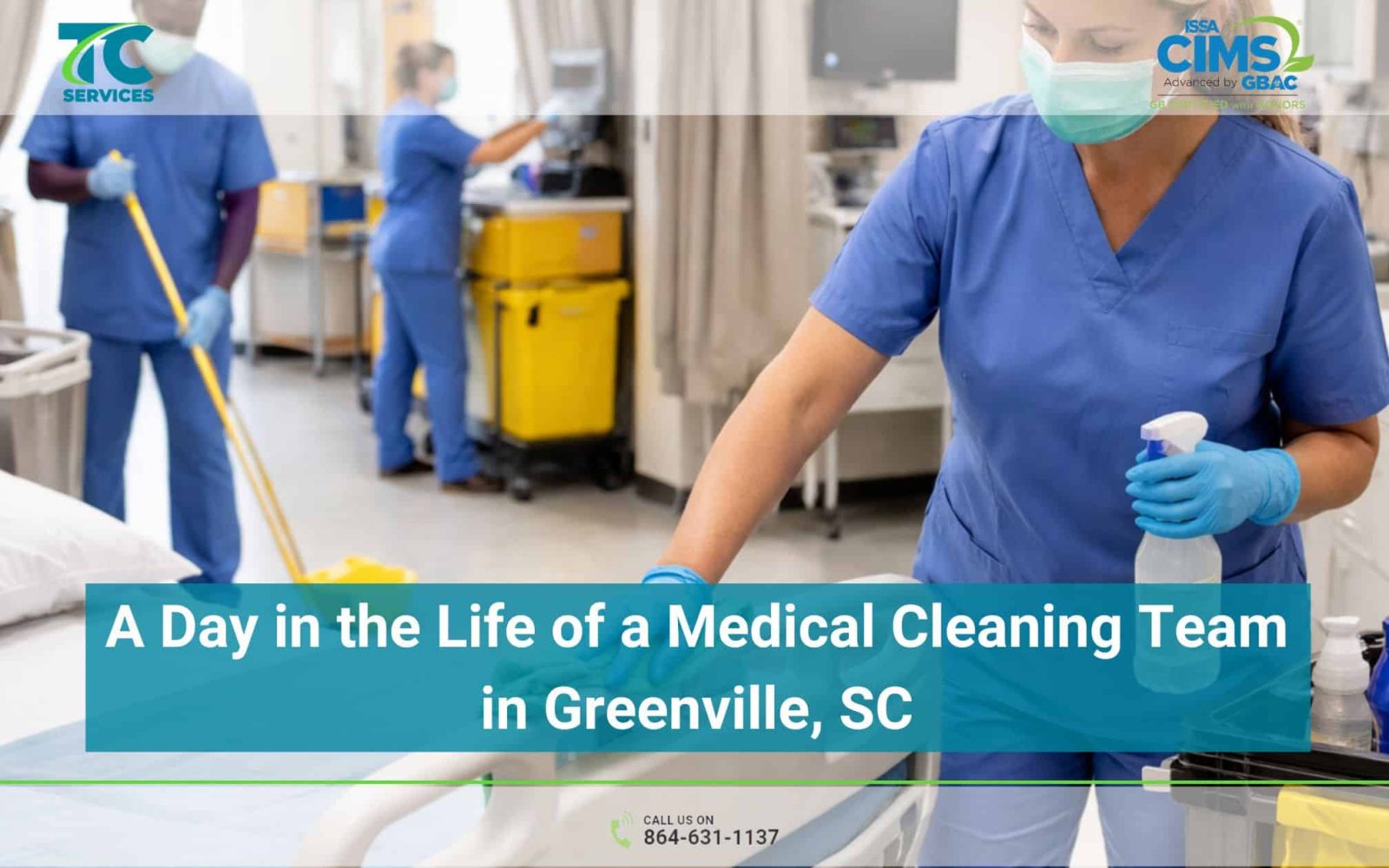
Healthcare facilities must stay clean every hour of the day. One missed step in cleaning can increase the risk of germs spreading to patients, staff, and visitors. That is why medical cleaning teams follow strict routines and detailed protocols. From early morning preparation to end-of-day inspections, every task is planned with safety in mind. Here is a look at what a typical day looks like for a medical cleaning team in Greenville, SC.
The Early Morning Preparation: Setting the Standard for Healthcare Cleanliness
Team Briefing and Review of the Day’s Cleaning Schedule
A typical day for a medical cleaning team begins before the facility becomes busy. The team meets for a short briefing to review the day’s cleaning schedule and responsibilities. Supervisors outline priority areas such as treatment rooms, exam areas, and waiting spaces. This meeting also allows staff to discuss any updates from the healthcare facility. Clear communication helps ensure every team member understands their tasks for the day.
Preparing Equipment, PPE, and Hospital-Grade Disinfectants
Before entering the facility, the cleaning team prepares the tools needed for the job. This includes mops, microfiber cloths, floor equipment, and approved disinfectants. Personal protective equipment such as gloves, masks, and protective gowns is also checked. Hospital-grade disinfectants are selected to meet healthcare sanitation standards. Proper preparation helps reduce delays and ensures the team can clean safely and effectively.
Understanding Facility-Specific Protocols and Safety Requirements
Each medical facility has its own procedures that cleaning teams must follow. These protocols may include special cleaning instructions for exam rooms, laboratories, or surgical areas. Teams also review safety rules related to waste handling and chemical use. Understanding these requirements helps prevent mistakes that could affect patient care. Following the correct protocols is essential in maintaining a safe healthcare environment.
Arriving at the Medical Facility: Prioritizing High-Risk Areas
Cleaning and Disinfecting Patient Rooms and Treatment Areas
Once the team arrives, they begin work in areas where sanitation is most critical. Patient rooms and treatment areas are cleaned and disinfected carefully. Surfaces such as beds, chairs, countertops, and medical equipment stands receive special attention. Cleaning staff follow a clear process to avoid cross-contamination. Proper disinfection helps reduce the spread of bacteria and viruses within the facility.
Sanitizing High-Touch Surfaces Throughout the Facility
High-touch surfaces are some of the most important areas to clean in healthcare settings. These include door handles, light switches, elevator buttons, and handrails. Cleaning teams disinfect these surfaces multiple times throughout the day. Frequent sanitation helps lower the risk of germs spreading between staff, patients, and visitors. Consistent attention to these areas is a key part of medical cleaning.
Following Strict Infection Control Procedures
Medical cleaning teams must follow strict infection control procedures at all times. This includes using color-coded cleaning tools to prevent cross-contamination. Staff also follow proper hand hygiene and PPE guidelines. Waste materials and used cleaning supplies are disposed of according to safety regulations. These steps help maintain a controlled and sanitary healthcare environment.
Midday Operations: Maintaining Clean and Safe Healthcare Environments
Routine Cleaning of Waiting Rooms and Administrative Areas
As patient traffic increases, waiting rooms and office spaces require regular cleaning. Cleaning teams wipe down chairs, reception counters, and shared surfaces. Floors are also checked for spills or debris. Keeping these areas clean helps maintain a professional environment for patients and visitors. It also supports overall infection control within the facility.
Restroom Sanitation and Waste Disposal Protocols
Healthcare restrooms require thorough and consistent sanitation. Cleaning teams disinfect sinks, toilets, partitions, and touchpoints such as faucet handles and door locks. Trash and medical waste containers are emptied following proper disposal procedures. These steps help prevent contamination and maintain hygiene in shared spaces. Proper restroom sanitation is essential in healthcare settings.
Continuous Monitoring and Spot Cleaning for High-Traffic Zones
Medical facilities experience constant movement throughout the day. Cleaning teams monitor hallways, entrances, and common areas for spills or contamination. Spot cleaning is performed whenever needed to maintain cleanliness. This proactive approach helps keep the facility safe and presentable at all times. Continuous monitoring ensures that no area is overlooked.
Behind the Scenes: Training, Compliance, and Quality Control
Adhering to Healthcare Cleaning Regulations and Standards
Medical cleaning teams must follow strict regulations designed for healthcare environments. These standards guide how disinfectants are used and how surfaces are cleaned. Compliance with these rules helps maintain patient safety and meet industry expectations. Cleaning teams stay informed about updates to sanitation guidelines. Following these standards ensures consistent and reliable results.
Ongoing Staff Training for Safety and Infection Prevention
Training plays a major role in professional medical cleaning. Staff members regularly receive instruction on infection prevention, cleaning techniques, and safety procedures. This training helps teams stay prepared for changing healthcare requirements. It also ensures that every team member understands proper sanitation practices. Continuous education supports safer healthcare facilities.
Quality Inspections and Communication with Facility Staff
Supervisors often conduct inspections to confirm that cleaning tasks meet required standards. These inspections help identify areas that may need extra attention. Cleaning teams also communicate with healthcare staff to address specific cleaning concerns. Open communication helps maintain a smooth workflow between medical personnel and cleaning teams. This teamwork supports a safer and cleaner environment.
The End of the Shift: Final Checks and Preparing for the Next Day
Deep Cleaning Tasks for Critical Areas
At the end of the shift, the team completes deeper cleaning tasks in key areas. This may include detailed floor cleaning, equipment sanitation, and disinfecting surfaces that require extra attention. These tasks help maintain high sanitation standards within the facility. Deep cleaning also prepares the space for the next day’s operations. It ensures the environment remains safe for patients and staff.
Restocking Cleaning Supplies and Sanitization Products
Before leaving, the team checks inventory and restocks essential cleaning supplies. Disinfectants, paper products, gloves, and other materials are replenished as needed. Keeping supplies organized ensures the next shift can begin work without delays. Proper inventory management is an important part of efficient medical cleaning services. It helps maintain consistent cleaning routines.
Reporting, Documentation, and Continuous Improvement
The final step of the day involves documenting completed cleaning tasks and reporting any issues. Teams record the areas cleaned and note any maintenance concerns. This documentation helps maintain accountability and transparency. It also allows supervisors to review performance and identify opportunities for improvement. At TC Services, clear reporting helps ensure consistent cleaning standards every day.
Don’t let germs clock in—call the cleaning team that shows them the door.
Medical cleaning services require careful planning, trained staff, and strict attention to detail every day. From early morning preparation to final inspections, each step helps protect patients, staff, and visitors. A reliable medical cleaning team helps healthcare facilities maintain safe and sanitary environments. Commercial janitorial services also support compliance with healthcare sanitation standards. If your healthcare facility in Greenville, SC needs dependable medical cleaning services, contact TC Services today to learn how their team can help keep your facility clean and safe.
