
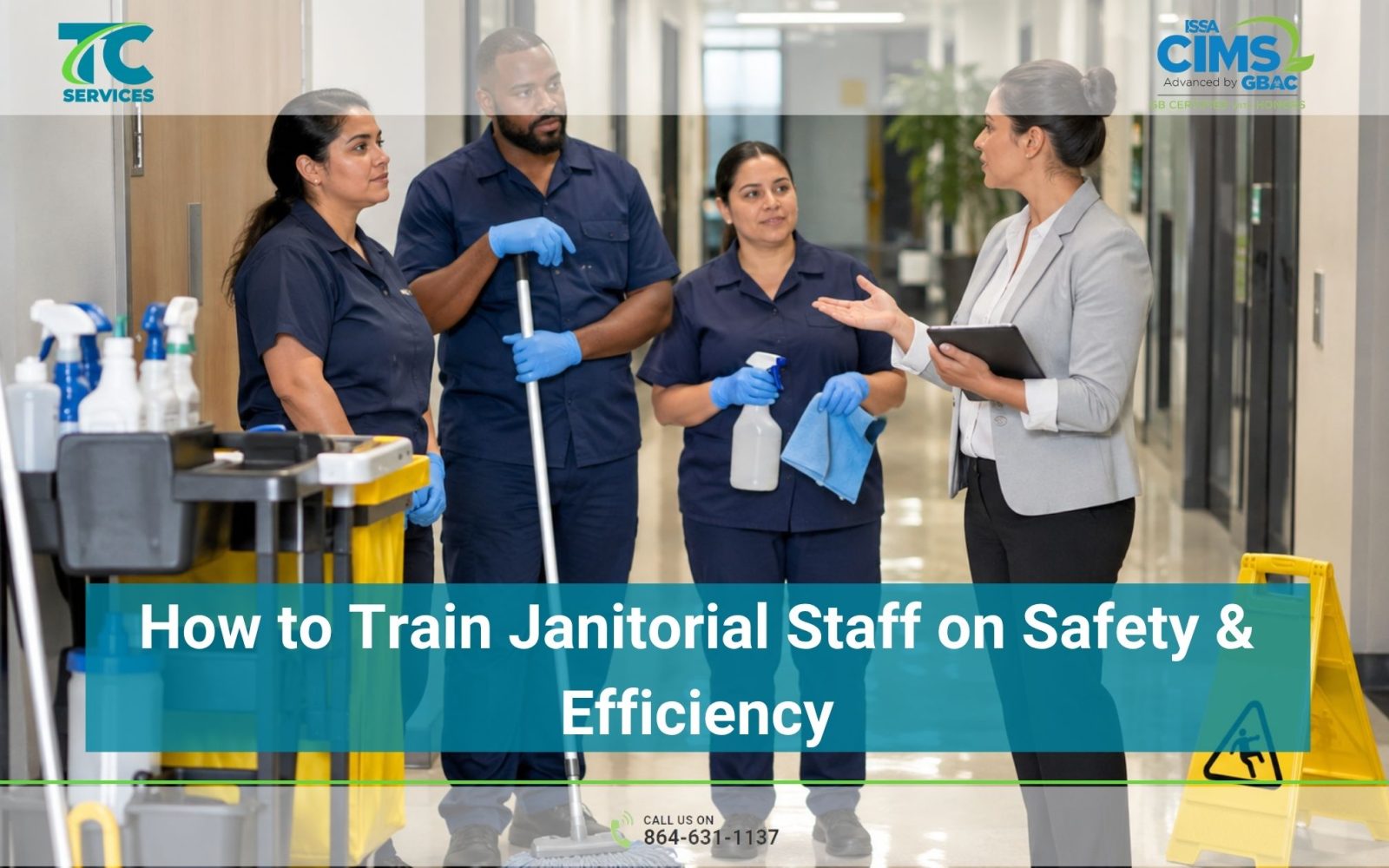
A well-trained janitorial team does more than keep a facility clean. Proper training helps staff work safely, complete tasks correctly, and use their time wisely. It also teaches employees how to handle cleaning products, operate equipment, and avoid common workplace hazards. With clear procedures and regular guidance, janitorial staff can deliver consistent results while improving efficiency. In this guide, we’ll cover how to train janitorial staff on safety and efficiency in the workplace.
Why Proper Janitorial Staff Training Matters
Protecting Employees and Building Occupants
Proper janitorial training helps protect both cleaning staff and the people who use the building each day. Employees should understand how to handle cleaning chemicals, equipment, spills, and other common workplace hazards safely. Training also helps staff recognize situations that could cause injuries or expose building occupants to unsafe conditions. Clear procedures can reduce mistakes when cleaning offices, restrooms, common areas, and other spaces. Staff should also know what to do when they notice a hazard or safety concern while working. Making safety part of daily janitorial work helps create a cleaner and safer facility for everyone.
Improving Cleaning Quality and Consistency
Training gives janitorial staff clear standards for how each cleaning task should be completed. Employees learn which products, tools, and methods to use for different surfaces and areas. Standard procedures also help prevent important tasks from being missed during a shift. When every team member follows the same process, cleaning results can remain more consistent throughout the facility. Supervisors can use checklists and inspections to identify areas where employees may need additional guidance. Consistent training supports reliable service and helps maintain the expected level of cleanliness.
Increasing Productivity and Reducing Workplace Incidents
Effective training helps janitorial employees complete their work efficiently without cutting corners on safety. Staff can learn the best order for completing tasks, preparing supplies, and moving through assigned areas. This can reduce wasted time caused by repeated trips, incorrect product use, or avoidable equipment problems. Safety training also teaches employees how to recognize and respond to hazards before an incident occurs. Fewer mistakes and disruptions allow the janitorial team to stay focused on its daily responsibilities. A well-trained team can improve productivity while supporting a safer workplace.
Start With Essential Janitorial Safety Training
Proper Use of Personal Protective Equipment (PPE)
Janitorial employees may need personal protective equipment depending on the cleaning task and products being used. Training should explain when gloves, eye protection, protective clothing, or other required PPE should be worn. Employees should also learn how to put on, remove, inspect, and dispose of or store PPE correctly. Supervisors should make sure workers understand that PPE must be used according to workplace procedures and product instructions. Damaged or worn protective equipment should be reported and replaced as required. Proper PPE training helps staff perform cleaning tasks with the right level of protection.
Safe Handling and Storage of Cleaning Chemicals
Cleaning chemicals require proper handling to protect employees and building occupants. Staff should be trained to read product labels and follow the manufacturer’s directions before using any cleaning solution. They should also understand why chemicals should not be mixed unless the product instructions specifically allow it. Cleaning products should remain properly labeled and be stored in designated areas away from incompatible materials. Employees should know where to find Safety Data Sheets and how to respond to spills or accidental exposure according to workplace procedures. Clear chemical safety training can help prevent misuse and unnecessary exposure.
Preventing Slips, Falls, Injuries, and Other Workplace Hazards
Janitorial work can involve wet floors, cords, equipment, lifting, and other potential workplace hazards. Training should teach employees how to identify these hazards and take steps to control them before starting a task. Wet floor signs and other warning markers should be placed where needed to alert building occupants. Staff should also receive guidance on safe lifting practices and proper use of ladders or step stools when required. Walkways should remain clear of cleaning supplies, cords, and equipment whenever possible. Regular safety training helps employees recognize common hazards and respond to them correctly.
Train Staff to Use Cleaning Equipment Safely and Correctly
Demonstrate Proper Equipment Operation
Employees should receive hands-on instruction before operating unfamiliar janitorial equipment. Supervisors can demonstrate how to start, operate, stop, and safely move each machine according to the manufacturer’s instructions. Training should cover floor machines, vacuums, carpet equipment, and any other tools employees are expected to use. Staff should also understand which equipment is suitable for specific surfaces and cleaning tasks. Employees should be encouraged to ask questions if they are unsure how a machine works. Clear demonstrations can reduce equipment misuse and help staff work more efficiently.
Perform Pre-Use Equipment Inspections
A quick inspection before using janitorial equipment can help employees spot potential problems early. Staff should check items such as cords, plugs, hoses, wheels, guards, and other relevant components before operation. Any visible damage, unusual sounds, leaks, or other concerns should be reported according to company procedures. Employees should not use equipment that appears unsafe or is not working correctly. A simple inspection checklist can make these checks easier to follow and document. Making pre-use inspections part of the routine supports safe and reliable equipment use.
Teach Proper Equipment Cleaning, Maintenance, and Storage
Janitorial equipment should be properly cared for after each use to keep it ready for future tasks. Employees should learn how to empty, clean, and inspect equipment according to the manufacturer’s instructions. Filters, pads, brushes, tanks, and other components may require routine attention depending on the machine. Staff should also know when maintenance concerns need to be reported to a supervisor or qualified technician. Equipment should be returned to its designated storage area with cords and accessories secured properly. Good equipment care can reduce downtime and help extend the useful life of janitorial tools.
Improve Janitorial Efficiency With Standardized Cleaning Procedures
Establish Cleaning Checklists and Standard Operating Procedures
Cleaning checklists and standard operating procedures give janitorial staff clear instructions for completing their work. Each checklist can outline the required tasks for specific rooms, areas, or shifts. Standard procedures should explain which tools, products, and cleaning methods employees should use when needed. These resources make it easier for staff to follow the same process and avoid overlooking important duties. Supervisors can also use completed checklists to review work and address recurring issues. Clear procedures create accountability while supporting consistent and efficient cleaning.
Teach Efficient Cleaning Sequences and Time Management
Janitorial staff should understand how to organize their work so they can complete tasks efficiently. Training can show employees how to prepare supplies before entering an area and follow a logical cleaning sequence. For example, staff can complete related tasks together instead of repeatedly returning to the supply room. Employees should also understand which duties are priorities and how much time should generally be allocated to each area. Good time management should never require staff to skip safety steps or lower cleaning standards. A clear workflow helps employees make better use of each shift while maintaining quality.
Prevent Cross-Contamination With Proper Cleaning Techniques
Preventing cross-contamination should be a key part of janitorial training, especially in restrooms, shared spaces, and high-touch areas. Employees should understand that cleaning tools used in one area may not be appropriate for another. Color-coded cloths, mop heads, or other systems can help separate tools by task or location when included in the facility’s procedures. Staff should also learn proper hand hygiene and glove-changing practices based on the work being performed. Cleaning tools should be cleaned, disinfected when appropriate, and stored properly after use. Consistent procedures help reduce the transfer of contaminants from one surface or area to another.
Make Janitorial Training an Ongoing Process
Conduct Regular Refresher and Safety Training
Janitorial training should continue after an employee completes the initial onboarding process. Regular refresher sessions can reinforce important safety rules, cleaning procedures, and equipment practices. Additional training may also be needed when new products, machines, or workplace procedures are introduced. Supervisors can use these sessions to address common mistakes or questions identified during daily work. Short, focused training sessions can make important information easier for employees to apply. Ongoing training helps keep safety and cleaning standards part of the team’s regular routine.
Monitor Performance Through Inspections and KPIs
Regular inspections help supervisors understand whether janitorial procedures are being followed correctly. Cleaning quality, completed tasks, inspection results, productivity, and safety performance can be tracked using relevant key performance indicators. These measures can show where the team is performing well and where additional training may be needed. Supervisors should use the results to provide clear and practical feedback rather than relying only on general observations. Performance data can also help identify recurring issues across specific areas, shifts, or tasks. A consistent review process supports accountability and helps maintain service standards.
Encourage Employee Feedback and Continuous Improvement
Janitorial employees can provide useful feedback because they work directly with cleaning procedures, products, and equipment each day. Supervisors should give staff a clear way to report problems, suggest improvements, or ask questions about their responsibilities. Employee feedback may identify inefficient processes, equipment concerns, or safety issues that are not immediately visible to management. For companies providing commercial janitorial services, this feedback can help improve daily workflows and service quality. TC Services also recognizes the value of clear communication, regular training, and performance reviews in supporting stronger janitorial teams. Combining employee feedback with ongoing training and updated procedures supports continuous improvement across the workplace.
Clean skills start with clear training—let TC Services show your team the way.
Proper janitorial training helps employees work safely, efficiently, and consistently. Clear safety procedures, equipment training, cleaning standards, and regular performance reviews can help teams maintain quality across every facility. Ongoing training also gives employees the knowledge they need to handle daily cleaning tasks and workplace hazards properly. TC Services provides professional training and janitorial services designed to support cleaning teams, strengthen safety practices, and improve overall performance. Contact TC Services today to learn more about our janitorial training programs and how we can support your team.
