
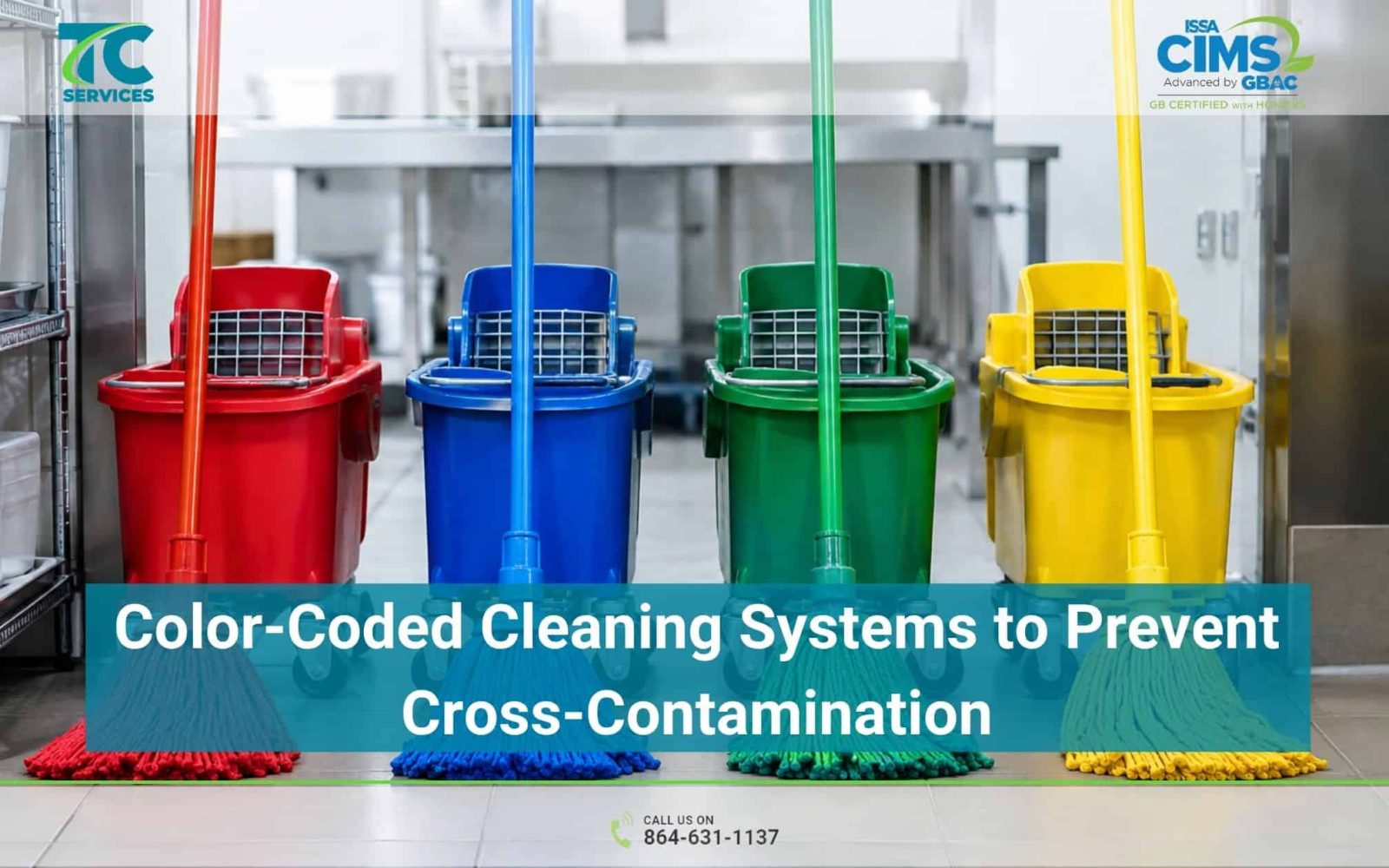
Using the same cleaning cloth or mop in different areas can spread germs instead of removing them. A color-coded cleaning system helps prevent this problem by assigning specific colors to tools used in different spaces. This makes it easier for cleaning teams to know which supplies belong in restrooms, offices, kitchens, and other areas. It also helps reduce the risk of cross-contamination and supports consistent cleaning practices. In this guide, we’ll explain how color-coded cleaning systems work and how businesses can use them to maintain cleaner, safer facilities.
What Is a Color-Coded Cleaning System?
How Color Coding Works in Commercial Cleaning
Color coding assigns specific colors to cleaning tools based on where or how they should be used. For example, one color may be used for restrooms while another is reserved for offices or common areas. This gives cleaning staff a quick visual way to choose the right equipment for each task. It also helps keep tools from different cleaning zones separate throughout a facility. The exact colors may vary, but the system should be simple, clear, and followed by the entire cleaning team.
Cleaning Tools and Supplies That Can Be Color Coded
Many everyday cleaning tools can be included in a color-coded cleaning system. Microfiber cloths, mop heads, buckets, brushes, sponges, and cleaning bottles can be assigned different colors. Cleaning carts and storage bins can also use colored labels to help organize supplies. This makes it easier for workers to find the correct equipment before entering a specific cleaning area. Using visible color markers can also reduce confusion when several employees share the same cleaning supplies.
Why Consistent Color Coding Matters
A color-coded system only works when employees use the colors consistently. Changing color assignments or using tools in the wrong areas can increase the risk of cross-contamination. A clear color chart helps workers understand what each color means and where each tool belongs. The same system should be used across shifts so every employee follows the same process. Regular training and supervision can help keep these procedures consistent over time.
How Color-Coded Cleaning Helps Prevent Cross-Contamination
Keeping Cleaning Tools Separate Between Different Areas
Cleaning tools can carry dirt, germs, and other contaminants from one area to another if they are not properly separated. Color coding helps workers identify which equipment belongs in restrooms, offices, kitchens, and other spaces. For example, a mop used in a restroom should not later be used to clean an office floor. Assigning different colors to these tools creates a clear separation between cleaning zones. This simple system can reduce accidental tool mix-ups during daily cleaning.
Reducing the Spread of Germs and Contaminants
Cleaning cloths, mops, and other reusable tools can pick up contaminants while cleaning surfaces. Using the same equipment in multiple areas may transfer those contaminants instead of keeping them contained. Color-coded tools help limit equipment to assigned areas and cleaning tasks. This can reduce the chance of carrying germs from higher-risk spaces into lower-risk areas. Color coding should also be combined with proper cleaning, disinfecting, laundering, and storage practices.
Supporting Safer and More Consistent Cleaning Practices
A clear color system makes cleaning procedures easier for staff to understand and follow. Employees can quickly identify the right equipment without having to stop and check each tool. This supports a more consistent cleaning process across different rooms and shifts. Supervisors can also identify when equipment is being used in the wrong cleaning zone. When combined with proper staff training, color coding can support cleaner and more organized commercial facilities.
Common Color Codes for Commercial Cleaning
Red for Restrooms and High-Risk Areas
Red cleaning tools are commonly assigned to restrooms and other areas with a higher risk of contamination. Red cloths, mop heads, buckets, and brushes may be used for toilets, urinals, and nearby surfaces. Keeping these tools separate helps prevent them from being used in offices, kitchens, or other general areas. Staff can immediately recognize red equipment as belonging to a specific cleaning zone. Facilities should clearly document which restroom surfaces and tasks are included under the red color code.
Blue for Offices and General Cleaning Areas
Blue is commonly used for general cleaning in offices and other lower-risk areas. Blue microfiber cloths and other equipment may be assigned to desks, conference rooms, hallways, and similar spaces. This keeps general-purpose cleaning tools separate from equipment used in restrooms or other higher-risk areas. A consistent blue color code can help workers quickly select the right supplies for routine cleaning tasks. Facilities can adjust these assignments based on their layout and specific cleaning requirements.
Green and Yellow for Food, Kitchen, and Specialty Areas
Green and yellow are often used to separate kitchens, food areas, and other designated cleaning zones. A facility may use green for food preparation areas and yellow for sinks, wash areas, or other specific surfaces. However, there is no single color arrangement that works for every commercial property. Businesses should choose assignments that match their facility, operations, and cleaning risks. Once colors are selected, workers should follow the same assignments every time they clean.
How to Implement a Color-Coded Cleaning System
Assign Colors Based on Areas and Cleaning Risks
Start by dividing the facility into cleaning zones based on how each area is used. Restrooms, offices, kitchens, breakrooms, and other spaces may require separate cleaning tools. Consider the level and type of contamination that cleaning staff may encounter in each area. Assign a clear color to each major zone or cleaning purpose and document what it represents. Keeping the system simple can make it easier for employees to remember and follow the assigned colors.
Train Janitorial Staff on Color-Coding Procedures
All janitorial staff should receive training before using a new color-coded cleaning system. Employees need to understand what each color represents and which tools should be used in each area. Training should also cover how equipment must be cleaned, stored, and kept separate after use. Color charts can be displayed in janitorial closets and storage areas as quick reminders. Refresher training can help reinforce the system and address mistakes before they become regular habits.
Monitor, Label, and Maintain Color-Coded Cleaning Equipment
Color-coded equipment should be checked regularly to make sure the system remains clear and effective. Labels that are worn, damaged, or difficult to read should be replaced as needed. Supervisors should also check that tools are being returned to their correct storage areas after use. Reusable cloths, mop heads, and other equipment must still be properly cleaned and maintained according to established procedures. Routine monitoring helps ensure that the color-coding system remains organized and easy for cleaning staff to follow.
Improve Facility Hygiene With Professional Commercial Cleaning
Color-Coded Cleaning for Offices and Corporate Facilities
Every commercial property has different cleaning needs based on its size, layout, traffic, and daily operations. A customized cleaning plan can focus on the areas that need the most attention. Offices may require regular restroom cleaning, trash removal, and carpet care, while industrial facilities may need more detailed floor cleaning. Cleaning frequency can also be adjusted based on how often each part of the property is used. This helps avoid both missed tasks and unnecessary service. A customized plan can make ongoing cleaning more organized and consistent.
Cross-Contamination Prevention in Medical, School, and Industrial Facilities
Medical facilities, schools, and industrial properties can have different cleaning needs based on how their spaces are used. Color coding can help separate equipment used in restrooms, classrooms, treatment areas, production spaces, and other designated zones. This gives cleaning staff a simple visual guide while they move between different parts of a facility. However, color coding should support rather than replace any required health, safety, sanitation, or facility-specific procedures. Proper training and clear cleaning protocols remain important for reducing cross-contamination in these environments.
Partner With TC Services for Professional Janitorial Cleaning
TC Services provides professional janitorial cleaning services for businesses and facilities with different cleaning needs. Trained cleaning teams can follow organized procedures designed to maintain clean and well-managed commercial spaces. Practices such as separating cleaning equipment and following established cleaning protocols can help reduce the risk of cross-contamination. A structured cleaning program also helps businesses maintain consistent standards across different areas of their facilities. Professional janitorial support can give facility managers a dependable approach to handling routine cleaning and ongoing facility maintenance.
Keep germs in their lane and cleanliness on track with TC Services.
Color-coded cleaning systems provide a simple way to keep cleaning tools organized and reduce the risk of cross-contamination. Assigning specific colors to different areas helps cleaning teams follow clear and consistent procedures. When combined with proper training, equipment care, and cleaning practices, this system can support a cleaner and safer facility. TC Services provides commercial janitorial services cleaning solutions designed around the needs of commercial facilities. Contact us today to learn how their cleaning team can help maintain a clean and well-managed workplace.
