
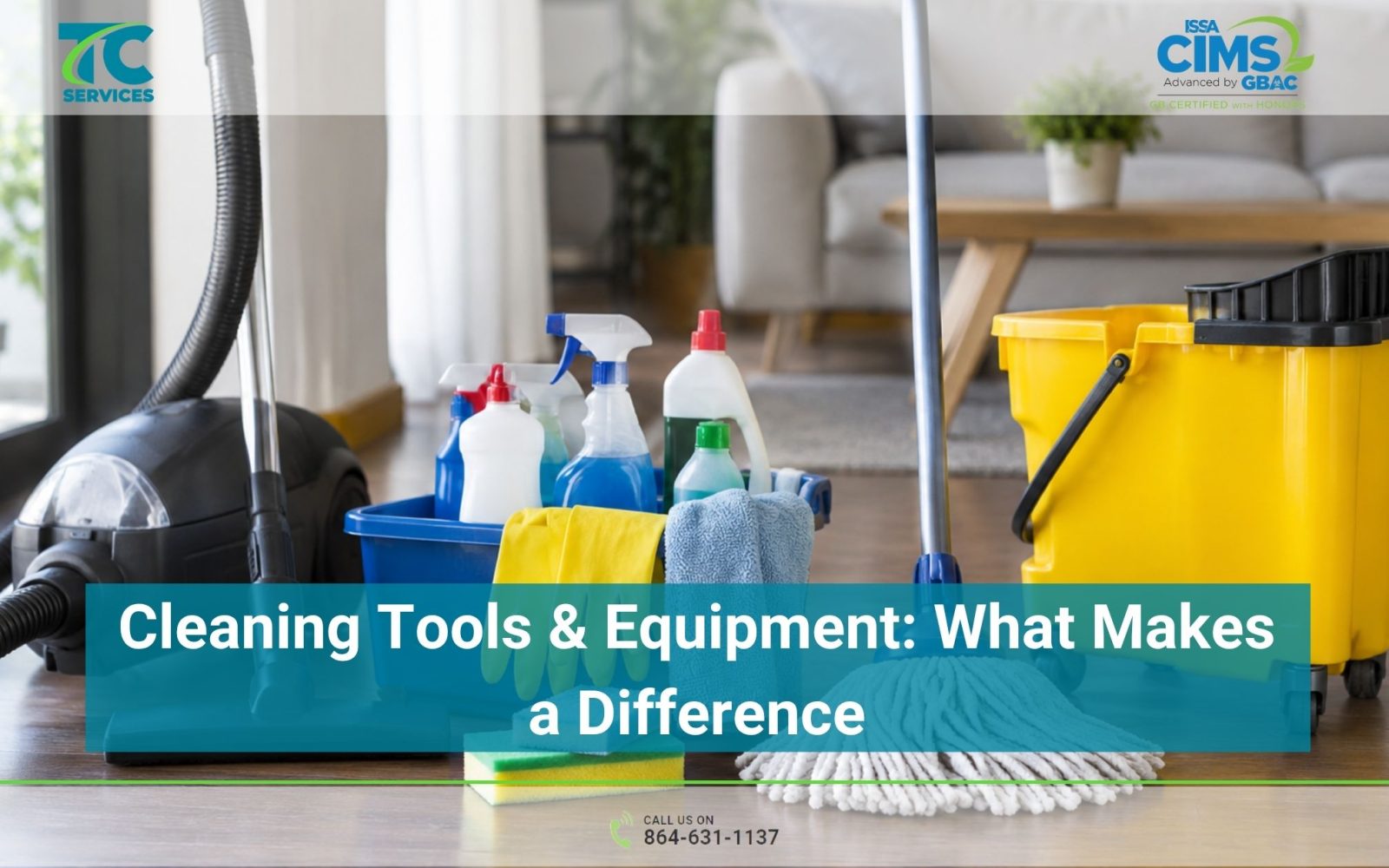
The right cleaning tools can make a big difference in how clean a commercial space looks and feels. Using the wrong equipment can make cleaning take longer and may not deliver the results you expect. From microfiber cloths and commercial vacuums to floor scrubbers and buffers, each tool has a specific job. Knowing which cleaning tools and equipment to use can help improve efficiency, maintain surfaces, and support consistent cleaning. In this guide, we’ll look at the cleaning tools and equipment that matter most and what makes them effective.
Why the Right Cleaning Tools and Equipment Matter
Improve Cleaning Efficiency
The right cleaning tools help staff complete tasks faster and with less effort. Commercial equipment is designed to handle larger spaces and frequent cleaning needs. For example, a floor scrubber can clean a wide area more efficiently than manual mopping alone. Proper tools can also help workers move from one task to another without wasting time. This allows cleaning teams to follow schedules more closely while still giving each area proper attention. Better efficiency can support a cleaner and more organized facility throughout the day.
Deliver More Consistent Results
Consistency is important when maintaining offices, schools, healthcare facilities, and other commercial spaces. Using the same professional cleaning tools and methods helps teams follow a clear standard for each task. Equipment such as commercial vacuums and floor machines can provide more even cleaning across large areas. The right tools also make it easier to reach corners, edges, and other areas that may be missed during manual cleaning. When equipment is used correctly, cleaning teams can reduce differences in results from one area to another. This helps facilities maintain a clean and professional appearance on a regular basis.
Help Protect Surfaces and Facility Assets
Floors, carpets, furniture, and fixtures require the right cleaning methods to stay in good condition. Using equipment that is too harsh for a surface can cause scratches, wear, or other damage over time. The correct tools allow cleaning teams to remove dirt while reducing unnecessary stress on the material. For example, carpet cleaning equipment should be suited to the type of carpet and level of soil present. Floor machines should also use the proper pads and settings for each flooring material. Careful equipment selection can help support routine maintenance and extend the useful life of facility surfaces.
Essential Tools for Commercial Cleaning
Microfiber Cloths, Mops, and Dusting Tools
Microfiber cloths, mops, and dusting tools are common parts of daily commercial cleaning. Microfiber can collect dust, dirt, and debris from many surfaces without requiring heavy scrubbing. Different cloths and mop heads can also be assigned to specific areas to help prevent cross-contamination. Dusting tools make it easier to clean furniture, fixtures, vents, and other surfaces that collect dust. Mops are useful for routine floor cleaning and handling spills in areas where larger machines may not be practical. Together, these basic tools support many of the everyday cleaning tasks needed throughout a facility.
Commercial Vacuums and Carpet Cleaning Equipment
Commercial vacuums are designed to handle regular use in offices, hallways, lobbies, and other busy spaces. They help remove dust, dirt, crumbs, and other debris from carpets and certain floor surfaces. Different vacuum designs can be used depending on the size and layout of the area being cleaned. Carpet cleaning equipment provides deeper cleaning when routine vacuuming is not enough to remove built-up soil. Extractors and other carpet cleaning machines can help maintain the appearance and condition of carpeted areas. Choosing the right equipment depends on the carpet type, traffic level, and cleaning needs of the facility.
Floor Scrubbers, Buffers, and Burnishers
Floor scrubbers, buffers, and burnishers serve different roles in commercial floor care. Automatic scrubbers wash and remove dirt from large hard-floor areas more efficiently than basic manual methods. Buffers can be used as part of floor maintenance to address marks and maintain the finish. Burnishers operate at higher speeds and are commonly used to restore shine on certain finished floors. Each machine requires the correct pads, settings, and cleaning products for the flooring material. When used properly, these machines can help maintain clean, polished, and professional-looking floors.
What Makes Professional Cleaning Equipment Different?
Commercial-Grade Performance and Durability
Professional cleaning equipment is built to handle the demands of regular commercial use. These machines often have larger capacities and stronger components than equipment designed for occasional household cleaning. This can make them more practical for large offices, facilities, and high-traffic areas. Commercial-grade machines are also designed to perform repeated cleaning tasks throughout a workday. Their durability can help reduce interruptions caused by equipment that is not made for frequent use. Reliable equipment gives cleaning teams the support they need to maintain steady cleaning routines.
Specialized Equipment for Different Cleaning Tasks
No single piece of cleaning equipment is suitable for every area or surface. Commercial cleaning may require different machines for carpets, hard floors, windows, upholstery, and other surfaces. Specialized equipment allows cleaning teams to choose a method that fits the specific task instead of relying on one general approach. A carpet extractor, for example, serves a different purpose than a floor scrubber or burnisher. The type and amount of dirt present can also affect which equipment should be used. Having access to different tools helps cleaning teams respond to a wider range of facility cleaning needs.
Proper Equipment Maintenance and Care
Cleaning equipment needs regular care to continue working as intended. Dirt, debris, worn parts, and clogged filters can reduce performance and make machines harder to use. Equipment should be cleaned and inspected according to the manufacturer’s instructions after or between uses as needed. Vacuum filters, brushes, pads, mop heads, and other parts may also need regular replacement. Proper storage can protect equipment from damage and keep tools organized between cleaning tasks. A clear maintenance routine helps cleaning teams keep their equipment ready for regular use.
Why Proper Training Matters When Using Cleaning Equipment
Safe and Effective Equipment Use
Professional cleaning equipment works best when staff understand how to operate it correctly. Training helps workers learn the proper controls, settings, attachments, and procedures for each machine. It can also help reduce mistakes that may damage equipment or the surfaces being cleaned. Workers should understand basic safety steps before using powered machines or handling cleaning products. Following manufacturer instructions and workplace procedures supports safer equipment use. Well-trained staff can use cleaning tools with greater care and confidence while completing their assigned tasks.
Matching the Right Equipment to Each Surface
Different surfaces require different cleaning tools, products, and methods. A tool that works well on tile may not be the right choice for carpet, wood, or another flooring material. Cleaning staff should identify the surface before selecting equipment or beginning the task. They also need to consider factors such as the type of dirt, floor finish, and condition of the area. Using the correct pads, brushes, attachments, and machine settings helps reduce the chance of unnecessary damage. Proper training helps workers make better equipment choices for each part of the facility.
Following Professional Cleaning Procedures
Cleaning equipment is only one part of an effective commercial cleaning program. Staff also need clear procedures that explain how and when different tasks should be completed. These procedures can cover equipment setup, cleaning methods, safety steps, and care after use. Following a standard process helps workers complete tasks in a consistent way across the facility. It also makes it easier for supervisors to review work and address areas that may need more attention. Combining professional equipment with clear procedures supports dependable cleaning from one service visit to the next.
Building a More Effective Commercial Cleaning Program
Create a Cleaning Plan That Fits the Facility
Choosing the right tools is only one part of maintaining a clean commercial facility. Professional commercial janitorial services also consider the building layout, types of surfaces, traffic levels, and cleaning frequency. Equipment should be matched with trained staff and clear procedures so each task is completed correctly. Regular inspections can help identify areas that need more attention or changes in cleaning methods. Cleaning plans may also need to change as facility use, staffing, or maintenance needs change over time. Bringing these elements together helps create a more organized and consistent approach to commercial cleaning.
Set Clear Cleaning Schedules and Priorities
A clear cleaning schedule helps ensure that important areas receive attention at the right time. High-traffic spaces, restrooms, break rooms, and shared areas may require more frequent cleaning than other parts of a facility. Cleaning priorities should be based on how each space is used and how quickly dirt and debris build up. Daily, weekly, and periodic tasks can be organized to help staff manage their responsibilities. Schedules should also allow for changes when facility needs or usage patterns shift. A structured approach helps keep cleaning tasks organized and consistent.
Monitor Cleaning Quality and Adjust as Needed
Regular inspections help determine whether a commercial cleaning program is meeting the facility’s needs. Supervisors can check completed work, identify problem areas, and address tasks that may need more attention. Feedback from facility managers can also help cleaning teams understand where adjustments are needed. Changes may include updating cleaning frequency, using different equipment, or adjusting procedures for certain areas. Tracking these details can help prevent small cleaning concerns from becoming ongoing issues. Regular reviews support a cleaning program that continues to meet the needs of the facility.
Clean smarter, not harder. Let TC Services handle the dirty work.
The right cleaning tools and equipment can make commercial cleaning more efficient, consistent, and effective. When these tools are paired with proper training and cleaning procedures, they can help maintain a clean and well-kept facility. Choosing equipment that fits each surface and cleaning task can also help protect floors, carpets, and other facility assets. TC Services provides professional janitorial cleaning services tailored to the needs of different facilities. Contact TC Services today to learn how our team can help keep your facility clean and ready for daily operations.
